Source Digital Electronic Universal Testing Machine for Materials
Compare 30 digital electronic universal testing machines from verified Chinese suppliers. These units feature computer control, static and dynamic loading, and capacities up to 500kN for diverse material testing needs; compare the available evidence and request quotations based on your requirements.
Key considerations
Products List


Factory Supply New Electronic Universal Testing Machine for Multi-Test Requirements
$4000.00 - $7000.00
MOQ: 1 Pieces


Practical Hot Sale Computer Control Electronic Universal Testing Machine
$2200.00 - $45000.00
MOQ: 1 set


High Accuracy 300kn Digital Display Electronic Universal Testing Machine
$1699.00 - $5000.00
MOQ: 1 Sets


500kn 50ton Electronic Universal Testing Machine with Computer Control
$3999.00 - $35999.00
MOQ: 1 Pieces


Computer Controlled Electro-Hydraulic Universal Testing Machine with Control Box
$10870.00 - $14412.00
MOQ: 1 Pieces



Comprehensive Sourcing Guide
Digital Electronic Universal Testing Machine Sourcing Guide
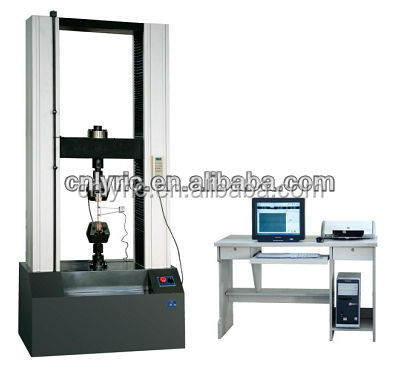
Procuring a Digital Electronic Universal Testing Machine requires a careful balance between mechanical precision and software integration. Buyers must first define the specific material properties they intend to measure, such as tensile strength, compression resistance, or flexural modulus. The market offers various configurations, including single-column frames for lighter loads and dual-column or hydraulic systems for higher capacities. Understanding these structural differences is essential for selecting a machine that aligns with your laboratory’s spatial constraints and testing volume.
The digital aspect of these machines refers to the control system and data acquisition capabilities rather than just the display. Modern units often feature computer-controlled loading, allowing for automated test sequences and precise data logging. Buyers should verify whether the system supports the specific standards relevant to their industry, such as ASTM or ISO protocols. Ensuring compatibility with existing laboratory information management systems can significantly streamline workflow and reduce manual data entry errors during the procurement process.
Product Scope and Observed Listing Signals
Current market listings indicate a diverse range of models, with observed prices spanning from $1,000 to $50,000 USD. This wide variance reflects differences in load capacity, frame construction, and software sophistication. Most suppliers list a minimum order quantity of one unit, suggesting that these machines are typically sold as individual capital equipment rather than bulk commodities. Buyers should expect significant price differences between basic digital displays and advanced computer-controlled systems with high-resolution displacement sensors.
The observed product scope includes various frame types, such as single-column designs suitable for lower capacities and more robust structures for heavier workpieces. Some listings specify a maximum capacity under 1000 kN, while others cater to smaller tensile tests with capacities in the hundreds of Newtons. It is crucial to distinguish between static and dynamic loading methods, as this choice impacts the machine’s suitability for fatigue testing versus standard strength evaluation. Buyers must carefully review the listed mass scope of workpieces to ensure the equipment can handle their largest samples.
Technical Specifications to Verify
Key technical parameters include the tensile space, stroke length, and test width, which determine the physical dimensions of the samples that can be accommodated. Listings show tensile spaces ranging from 600 mm to customizable options, with test widths often adjustable between 400 mm and 500 mm. Buyers should verify the maximum diameter of the workpiece, which can range from under 500 mm to over 1000 mm depending on the model. Ensuring these physical dimensions align with your sample inventory prevents costly mismatches between equipment and testing requirements.
Accuracy and resolution are critical for reliable data, with some systems offering displacement resolutions of 0.001 mm and accuracy grades of 0.5%. The power source is another vital specification, with options including AC220V for lighter units and AC380V for heavier, high-capacity machines. Buyers must also check the loading method, whether electronic, mechanical, or hydraulic, as this affects the speed and control of the test. Verifying the weight of the machine, which can range from 100 kg to over 2000 kg, is essential for planning laboratory floor loading and installation logistics.
Compliance and Safety Documentation
Safety is paramount when operating universal testing machines, especially those with high load capacities or hydraulic systems. Buyers should request detailed safety documentation, including emergency stop procedures, guard requirements, and electrical safety certifications. The machine’s control system should include fail-safes to prevent overloading or unexpected movement during operation. Ensuring that the equipment complies with local electrical and mechanical safety standards is a non-negotiable requirement for laboratory accreditation and operator protection.
Documentation should also cover the calibration and verification processes required to maintain accuracy over time. Buyers need to understand the recommended calibration intervals and the availability of certified calibration services. The software used for data acquisition should provide audit trails and secure data storage to meet regulatory requirements in industries like pharmaceuticals or aerospace. Verifying that the supplier provides comprehensive user manuals and technical support documentation is essential for safe and effective long-term operation.
Cost Drivers and Commercial Terms
The total cost of ownership extends beyond the initial purchase price to include installation, calibration, and maintenance expenses. Factors such as frame material, motor type, and software licensing significantly influence the base price. Buyers should inquire about the inclusion of essential accessories, such as grips, extensometers, and compression platens, as these are often sold separately. Clarifying whether the quoted price includes shipping, insurance, and customs duties is crucial for accurate budgeting, especially for international procurement.
Commercial terms regarding warranty and after-sales support are equally important. Buyers should verify the duration and coverage of the warranty, including whether it covers parts, labor, and software updates. Understanding the lead time for delivery and installation is essential for project planning, as manufacturing and shipping can vary significantly. Suppliers may offer customization options for frame dimensions or software features, which can impact both the cost and the delivery schedule.
Supplier Qualification and Quality Control
Selecting a qualified supplier involves verifying their manufacturing capabilities and quality control processes. Buyers should request information about the supplier’s production facilities, including their ability to produce custom frames or integrate specific components. Checking for relevant manufacturing certifications and quality management systems can provide assurance of consistent product quality. Suppliers based in major manufacturing hubs, such as China, often have established supply chains for electronic and mechanical components, which can affect reliability and lead times.
Quality control should extend to the pre-shipment inspection and testing of the machine. Buyers should ask for factory acceptance test reports that verify the machine’s performance against specified accuracy and load capacity standards. Understanding the supplier’s process for packaging and shipping, such as the use of fumigation-free wooden boxes or plywood cases, is important for preventing damage during transit. Establishing clear communication channels for technical support and troubleshooting is essential for resolving any issues that may arise after installation.
Long-Term Procurement Checks
Long-term success depends on the availability of spare parts and ongoing technical support. Buyers should verify the supplier’s inventory of critical components, such as load cells, motors, and control boards, to minimize downtime during repairs. Understanding the lifecycle of the software and the availability of updates is crucial for maintaining compatibility with evolving laboratory standards. Suppliers that offer comprehensive training programs can help ensure that operators use the equipment correctly, extending its lifespan and improving data quality.
Regular maintenance and calibration are essential for maintaining the accuracy and reliability of the testing machine. Buyers should establish a preventive maintenance schedule that includes cleaning, lubrication, and periodic verification of key parameters. Keeping detailed records of all maintenance activities and calibration results can help identify trends and predict potential failures. Building a strong relationship with the supplier can facilitate faster resolution of technical issues and access to new features or upgrades as technology evolves.
FAQs
What is the maximum load capacity for these machines?
The maximum load capacity is under 1000 kN, with specific models offering 500 kN. This range supports testing for materials requiring moderate force. Buyers should verify the exact KN rating for their specific application needs before ordering to ensure compatibility with their testing standards.
Can the tensile space be customized for larger workpieces?
Yes, customization is available for the tensile space and stroke. While standard models feature a 600 mm tensile space and 700 mm stroke, these dimensions can be adjusted. This flexibility allows the machine to accommodate workpieces with varying lengths and diameters up to 1800 mm.
What power source is required for operation?
Most models operate on AC220V power, while larger units may require AC380V. The power source depends on the specific model and capacity. Buyers must confirm the voltage requirement during the inquiry phase to ensure their facility has the appropriate electrical infrastructure for safe and efficient machine operation.
How is the accuracy grade defined for these testers?
The accuracy grade is typically 0.5%, with displacement resolution at 0.001 mm. This precision ensures reliable data for material testing. The control is computer-based, allowing for detailed analysis. Buyers should verify the specific accuracy grade for the model they intend to purchase to meet their quality standards.
What packaging is used for international shipping?
Products are packed in export packages, fumigation-free wooden boxes, or plywood cases. This ensures safe transit across borders without additional treatment. The packaging protects the machine from damage during logistics. Buyers should specify their preferred packaging type during the order process to align with their import regulations.
Where are these universal testing machines manufactured?
These machines are manufactured in China, specifically in Ji Nan, Shan Dong. This region is known for its industrial manufacturing capabilities. Buyers can expect consistent production standards and supply chain efficiency. Origin details are provided to help assess logistics costs and lead times for international orders.